
Home · What to eat · Order Grilled Meat Salads, Stir-Fries with Protein, or Tom Yum Soup at Thai Restaurants
What to eat
What should I order at a Thai restaurant?
Thai menus have clear wins: grilled meat salads, protein-forward stir-fries and broth soups — substance without the coconut milk or noodle load.
Go for grilled meat salads like larb or nam tok, stir-fries built on protein and vegetables, or tom yum soup. These give you complete meals — protein, vegetables, and flavor — without the coconut milk base or noodle bulk that makes other Thai dishes sit heavy.
Best choices
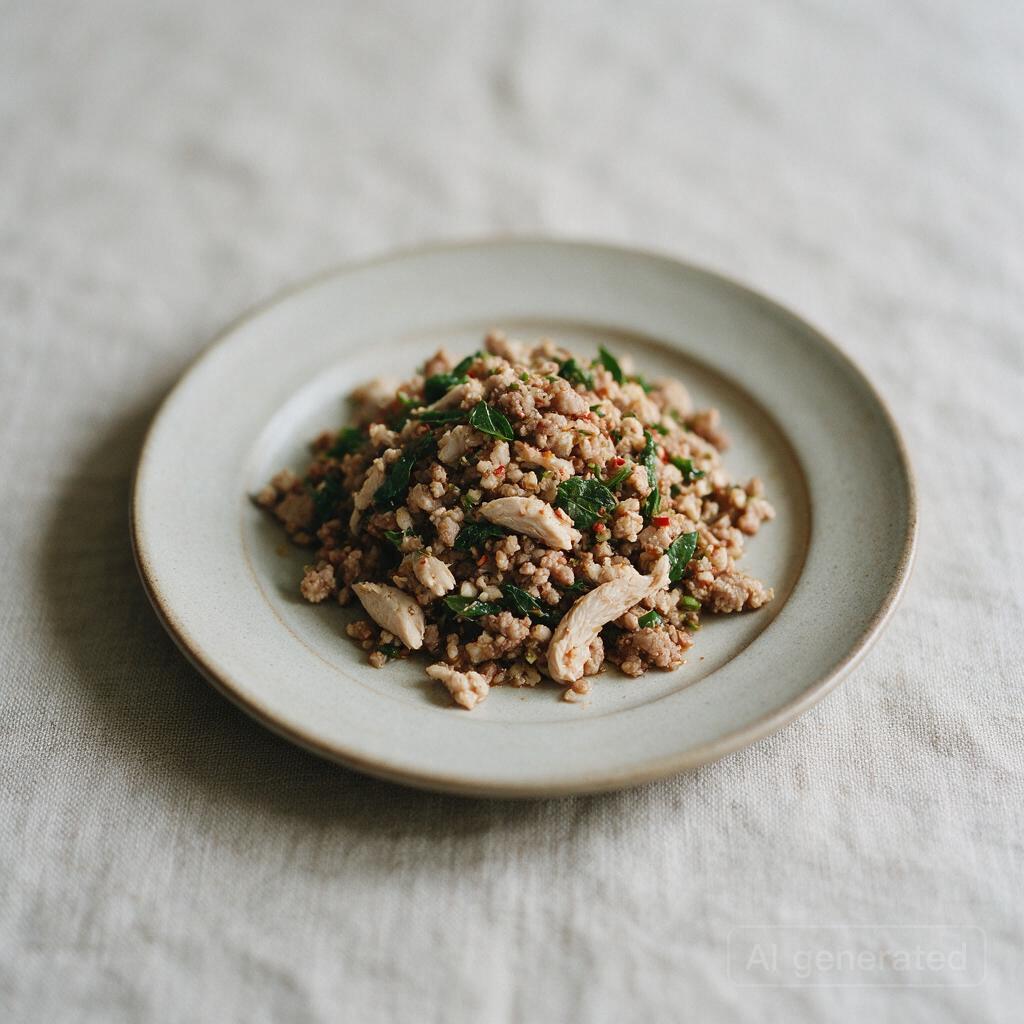 Larb (minced meat salad) with chicken, pork, or turkeyGround meat tossed with lime, fish sauce, toasted rice powder, and fresh herbs — it's a complete protein dish with sharp flavors and no filler, served with lettuce cups or cabbage
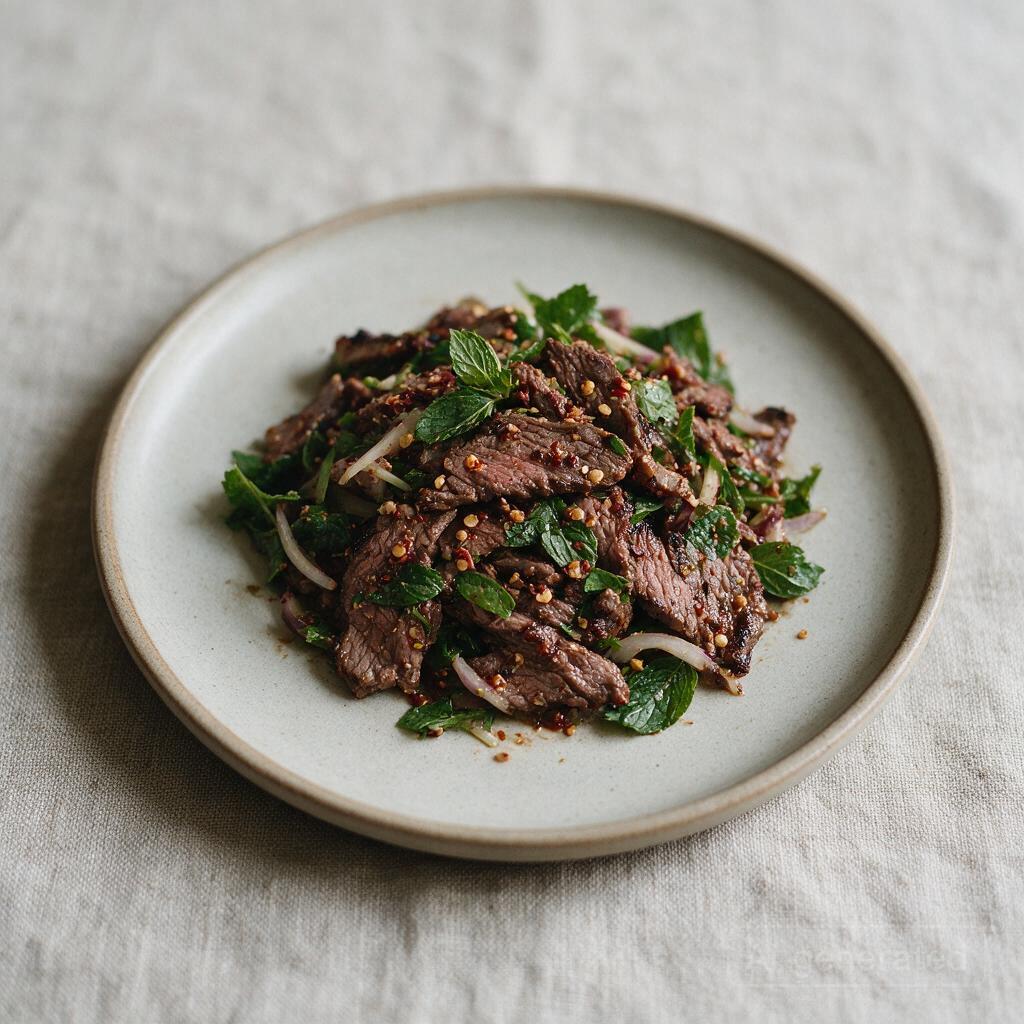 Nam tok (grilled beef salad) or any grilled meat saladSliced grilled steak over greens with lime dressing, shallots, and mint — the char adds flavor, the greens add volume, and there's no sauce carrying the plate
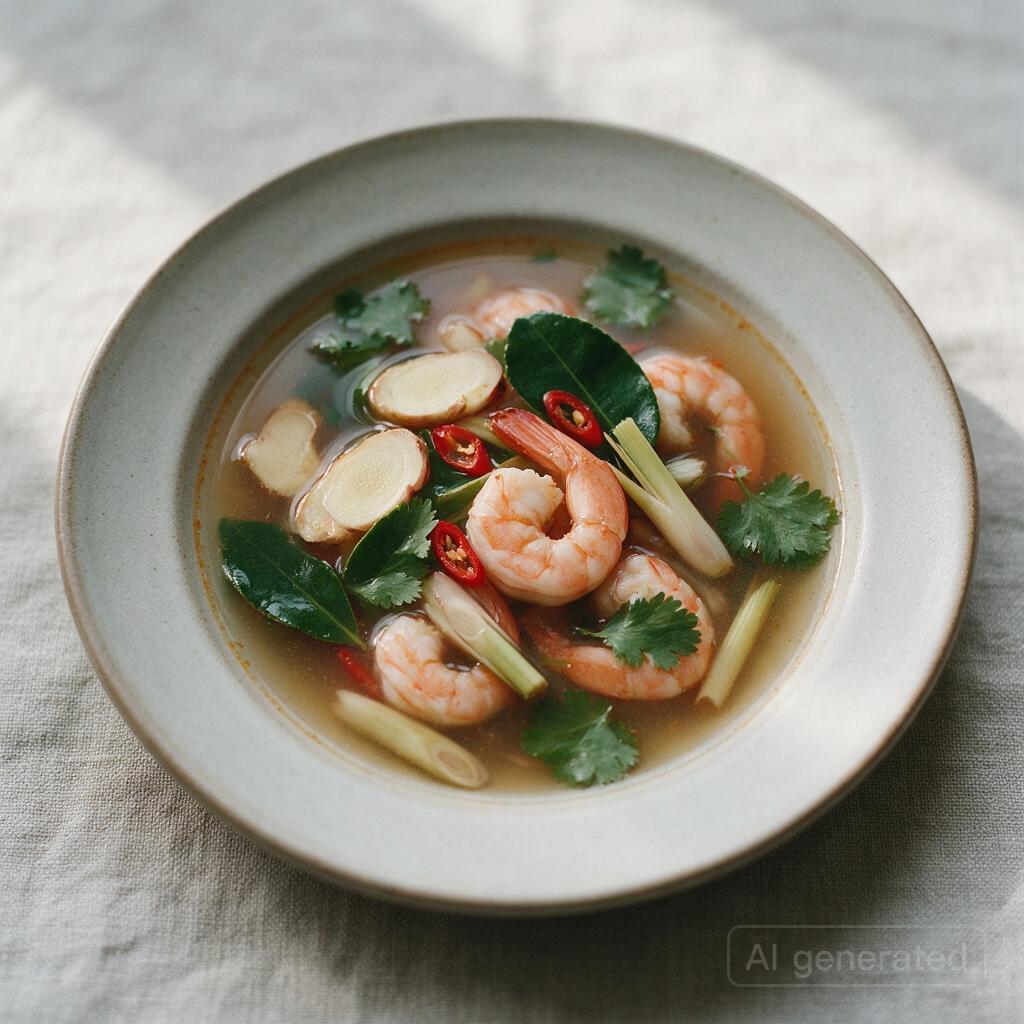 Tom yum soup with shrimp or chickenHot and sour broth loaded with shrimp or chicken, mushrooms, tomatoes, and aromatics — it's a full bowl of protein and vegetables in a clear, spiced broth instead of coconut milk
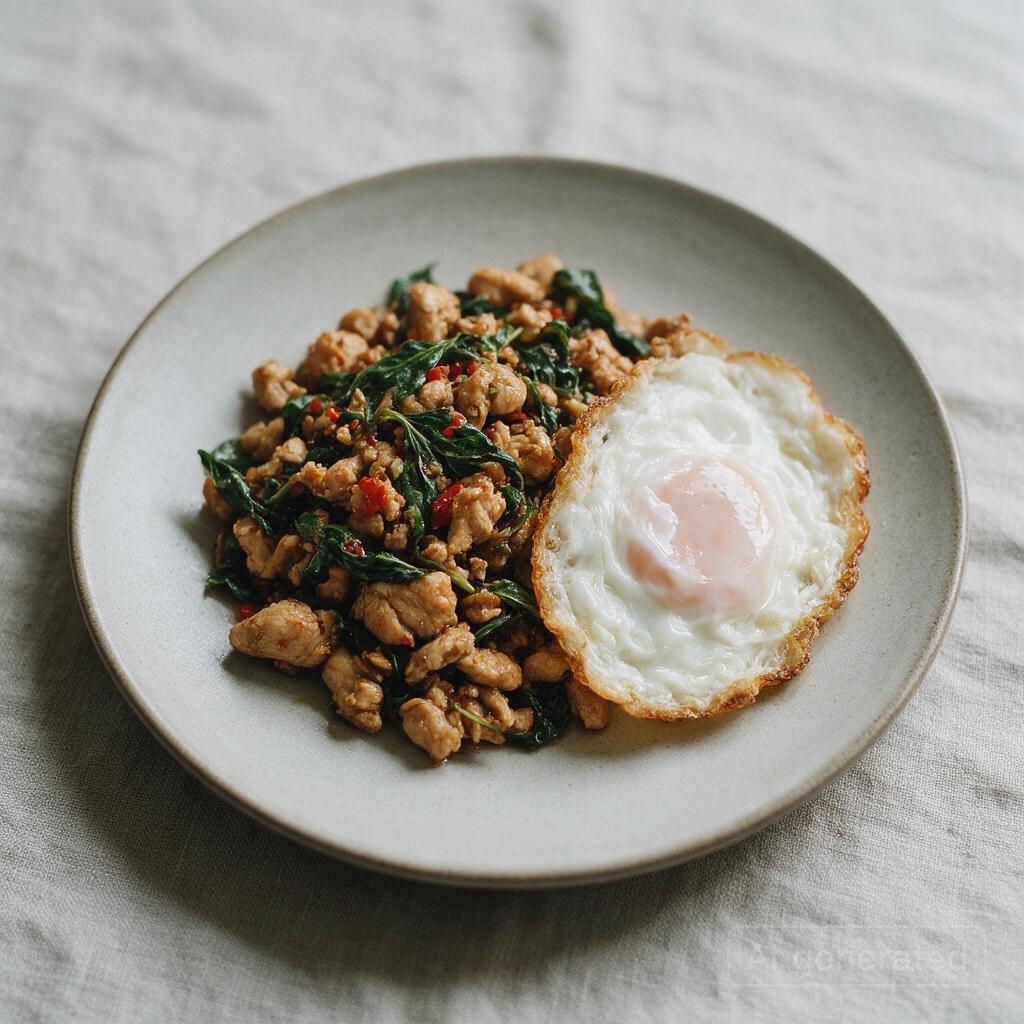 Stir-fried basil with chicken, pork, or shrimp (pad krapow)Protein stir-fried with Thai basil, garlic, and chilies over a small amount of rice — the dish is mostly meat and the sauce is light, not thickened or sweetened
- 5Grilled chicken or pork skewers (satay or moo ping) with side salad instead of peanut sauceStraight grilled meat on sticks — ask for extra cucumber salad or papaya salad on the side instead of loading up the peanut sauce, which is where the density lives
Watch out for
- Curries arrive in coconut milk, which is what makes them rich and filling — even a small bowl carries more than it looks like, and the sauce is the whole point of the dish
- Pad thai and drunken noodles are noodle dishes first, with protein added — the noodles are the base, tossed in tamarind or soy-based sauce, and they fill the plate
- Fried rice is exactly that — rice stir-fried in oil with egg, and the protein is an addition, not the foundation of the dish
- Spring rolls and curry puffs are fried dough or wrappers — the filling is small, the wrapper or frying oil is what you're eating
Depending on the day
You want something warming and filling
Order tom yum or tom kha soup as your main dish, not a starter — ask for extra protein, and it becomes a full meal. The broth-based tom yum is lighter; tom kha has coconut milk but still centers on the broth and the shrimp or chicken, not on noodles or rice.
The table is sharing family-style
Steer the order toward grilled and stir-fried dishes rather than curries and noodles — one curry is fine, but if half the table is coconut-based or noodle-based, you're eating mostly that. Load up on larb, som tam (papaya salad), and grilled meats so there's something to fill your plate that isn't sauce or starch.
Also asked
What should I try at a Thai restaurant?
Start with larb or som tam (green papaya salad) — they show you what Thai food does with acid, heat, and fresh herbs without leaning on coconut milk or noodles. Then try tom yum soup or a basil stir-fry. These dishes let you taste the core flavors — lime, fish sauce, chilies, garlic, basil — in ways that don't bury them under richness. If you want to try curry, get it as a shared dish, not your whole plate, so you taste it without committing to a bowl of it.
What's healthy at a Thai restaurant?
Grilled meat salads, tom yum soup, and stir-fries where the protein is the main event, not the addition. These dishes are built on meat or shrimp, vegetables, and bright, sharp flavors from lime, chilies, and herbs — not on coconut milk, noodles, or frying. Thai menus make this easy because the grilled and soup sections are clearly marked, and the descriptions tell you what's in the dish. Avoid anything described as creamy, fried, or crispy, and you're already in the right zone.
What should I order at a Thai restaurant for the first time?
Order pad krapow (basil stir-fry with chicken or pork) or larb if you want to see what Thai food actually tastes like — sharp, herbal, and bright, not the sweetened or coconut-heavy versions that dominate American Thai menus. If you want something familiar in structure, get tom yum soup or grilled chicken with papaya salad. Skip pad thai on your first visit — it's fine, but it's the least representative dish on the menu, and it won't tell you whether you like Thai food, only whether you like sweetened noodles. Start with something that leads with lime, fish sauce, and fresh herbs, and you'll know immediately if this cuisine is for you.
The dishes behind this
Most people walk into a Thai restaurant and order pad thai or a curry because those are the dishes they recognize, then spend the rest of the meal feeling like they ate a bowl of sauce or a plate of noodles with some protein on top. Thai menus are not hiding the better calls — they're right there in the grilled section and the salad section, clearly labeled, often with pictures. The problem is that diners skip past them because they don't sound like enough food, or because they assume a salad won't be filling. A larb or nam tok is not a side salad. It's a pile of seasoned meat with lime, herbs, and toasted rice, served with vegetables for wrapping or scooping, and it's more protein-forward than most of what Americans think of as a main dish.
Thai cooking gets its reputation from balance — sour, salty, sweet, and hot in every dish — but that balance plays out differently depending on what's carrying the plate. In a curry, the coconut milk is the carrier, and everything else floats in it. In a stir-fry or a salad, the lime juice, fish sauce, and chilies coat the protein and vegetables directly, so you taste them on the meat, not in a sauce you're spooning over rice. This is why the same menu can feel light or heavy depending on what you order. The flavors are the same; the structure is different. If you want to leave a Thai restaurant feeling like you ate a solid meal without feeling like you drank a bowl of coconut milk, you order from the parts of the menu where the protein and vegetables are the dish, not the passengers.
The other thing most people get wrong is treating Thai food like it needs rice or noodles to be complete. It doesn't. Larb is served with sticky rice or lettuce, but the dish itself is already a full meal — the rice is there to cool down the heat or add texture, not to fill you up. Tom yum soup is a bowl of shrimp, mushrooms, and tomatoes in a hot-and-sour broth; adding rice makes it more filling, but the soup is not incomplete without it. Thai restaurants in the U.S. tend to serve everything with a mountain of jasmine rice because that's what diners expect, but the menu is not designed around rice the way Chinese or Japanese menus are. If you order a grilled meat salad and a stir-fry, you don't need rice to make it a meal. You already have one.
The clearest signal on a Thai menu is whether a dish is described as creamy, crispy, or fried, or whether it's described as grilled, stir-fried, or in broth. That tells you immediately what's carrying the plate. Curries are creamy. Spring rolls and curry puffs are fried. Pad thai and drunken noodles are noodle dishes. Everything else — the salads, the grilled meats, the stir-fries, the soups — is built on protein and vegetables with the sauce or dressing as the accent, not the base. This is not about avoiding flavor or eating plain food. Thai salads and stir-fries are some of the most aggressively flavored dishes on any menu. It's about choosing dishes where the flavor comes from lime, fish sauce, garlic, and chilies hitting the meat directly, instead of from a sauce you're eating with a spoon.
Other decisions like this
Decide before you order
Snap it before you order
Snap your meal — one Coach's Call in seconds.
The AI meal coach that remembers what you ate before — not a calorie tracker.
Try this in FastSnap
Get FastSnap