
Read the plate
What FastSnap means by a balanced plate
Read the plate: what helps, what tips it, one useful move — FastSnap’s decision frame, not a MyPlate quiz or calorie target.
· updated
A balanced plate isn’t about perfection. It’s a plate you know how to act on.
You can see what is helping, what is tipping it, and the next useful move. That is Read the Plate. “Balanced” here is Learn language for that decision frame — not a string the app prints. On the result screen you see a Coach’s Call, and when the plate fits, an Aligned mark.
Helping
- Chicken
- Greens
Watch
- Rice
Tips
- Cream sauce
One move
Sauce on the side.
What it is not
Not a calorie total. Not a macro religion. Not a food-group pie chart you fail if you miss a slice.
Public models like MyPlate or the Harvard Healthy Eating Plate are useful geometry. FastSnap’s job is different: one clear call for this sitting and your goal.
Two reads
Chicken, rice, greens + heavy sauce — diagram above.
Burger and fries:
Helping
- Protein from the burger
Tips
- Fries
One move
Keep the burger; skip or share the fries.
A balanced read gives you a move you can actually follow — not a demand that the photo match a poster.
Try it yourself
What is tipping this plate: chicken, greens, rice, cream sauce?
What FastSnap does
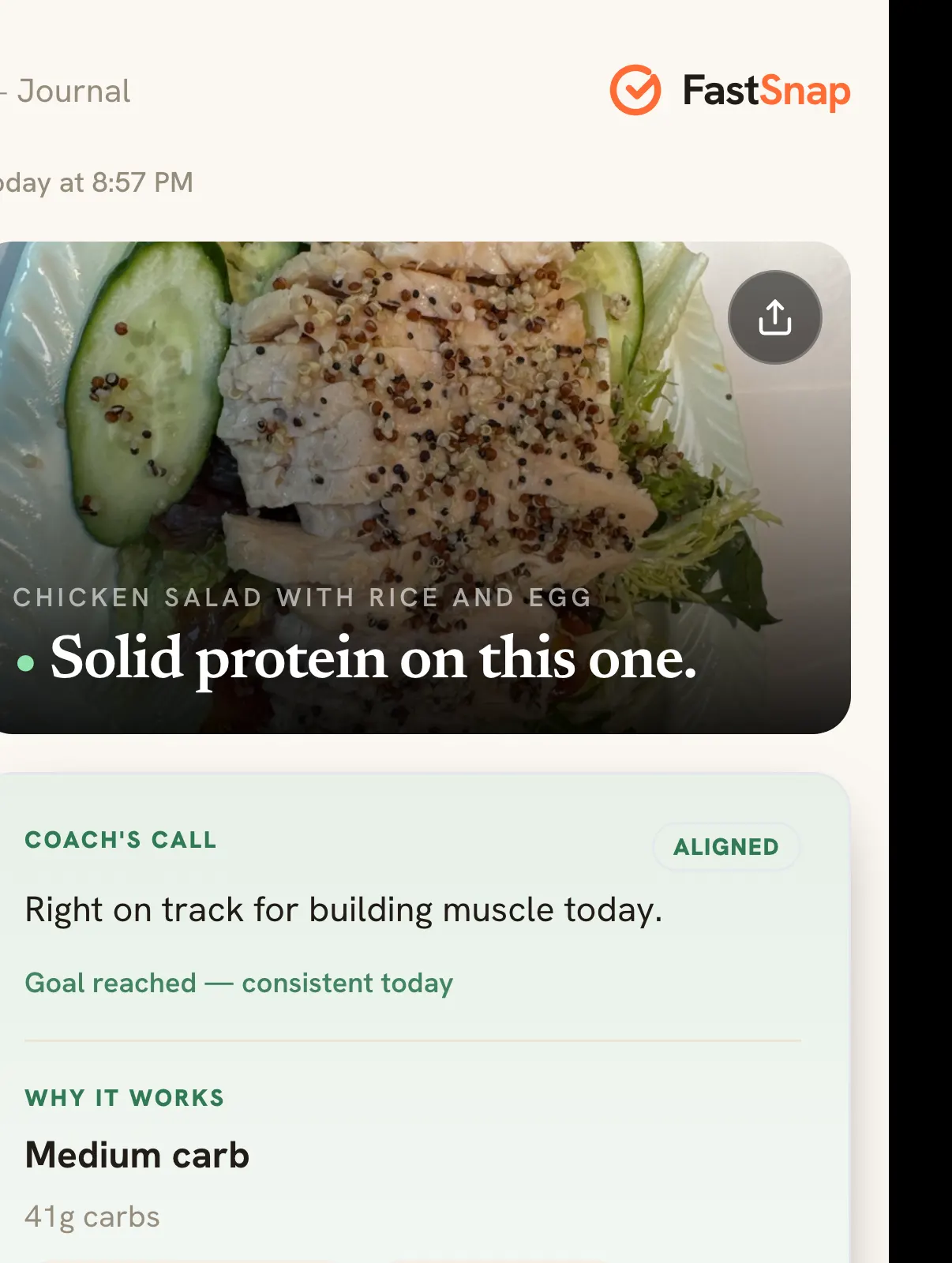
A balanced read reduces overthinking. You leave knowing the next decision. Over time, repeated patterns add context, so one lunch is not the whole story.
Next: One Move · What tips the plate? · Protein-first when the plate is mixed
Sources and limitations
FastSnap’s idea of a balanced plate is a product concept, not a medical definition. Public nutrition models are useful references, not FastSnap’s scoring rules. We describe the food and the decision, not your body.
What FastSnap does
FastSnap’s Coach’s Call names one move for this plate. When the call lands as Aligned, that is Read the Plate working — not a score against a textbook diagram.