
Read the plate
Looks can fool you
Two plates can look the same size — one quietly helps, one quietly tips. Train your eyes for richness that hides.
· updated
Same bowl size. Which one tips harder?
Try it yourself
Two bowls look the same size. One is grilled chicken, greens, and steamed veg. The other is creamy pasta with cheese and oil. What’s true?
Helping
- Grilled chicken
- Greens
Watch
- Rice (if piled)
Tips
- Cream + cheese + oil in the pasta bowl
One move
Keep the protein — sauce lighter, or share the rich bowl.
FastSnap’s position
Looks can fool you.
Two plates can look equally “small.”
One quietly helps.
One quietly tips.
Train your eyes to see the difference.
This isn’t a new scoring rule. It’s a Read the Plate skill: notice richness that hides — then name the tip so One Move is obvious.
Richness hides surprisingly well
Train for these — they rarely look like the loudest thing on the table:
- Oil disappears into food.
- Cream sauces don’t look “big.”
- Sugary drinks don’t look like a meal.
- Fried coatings add more than they appear to.
None of that requires a spreadsheet. It requires noticing what tips the plate.
Helping · Watch · Tip · One Move
- Helping can still be the protein you keep.
- Watch might be the starch mound.
- Tip is often the rich add-on — sauce, fry, drink, coating — not “the whole plate is wrong.”
- One Move lands on that tip.
Try it yourself
Burger + large fries. Same table space as burger + side salad. What usually tips harder?
What FastSnap does
When recognition sees a rich cook, a creamy pour, or a sugary drink, the Coach’s Call can say so in food language — then hand you What’s next.
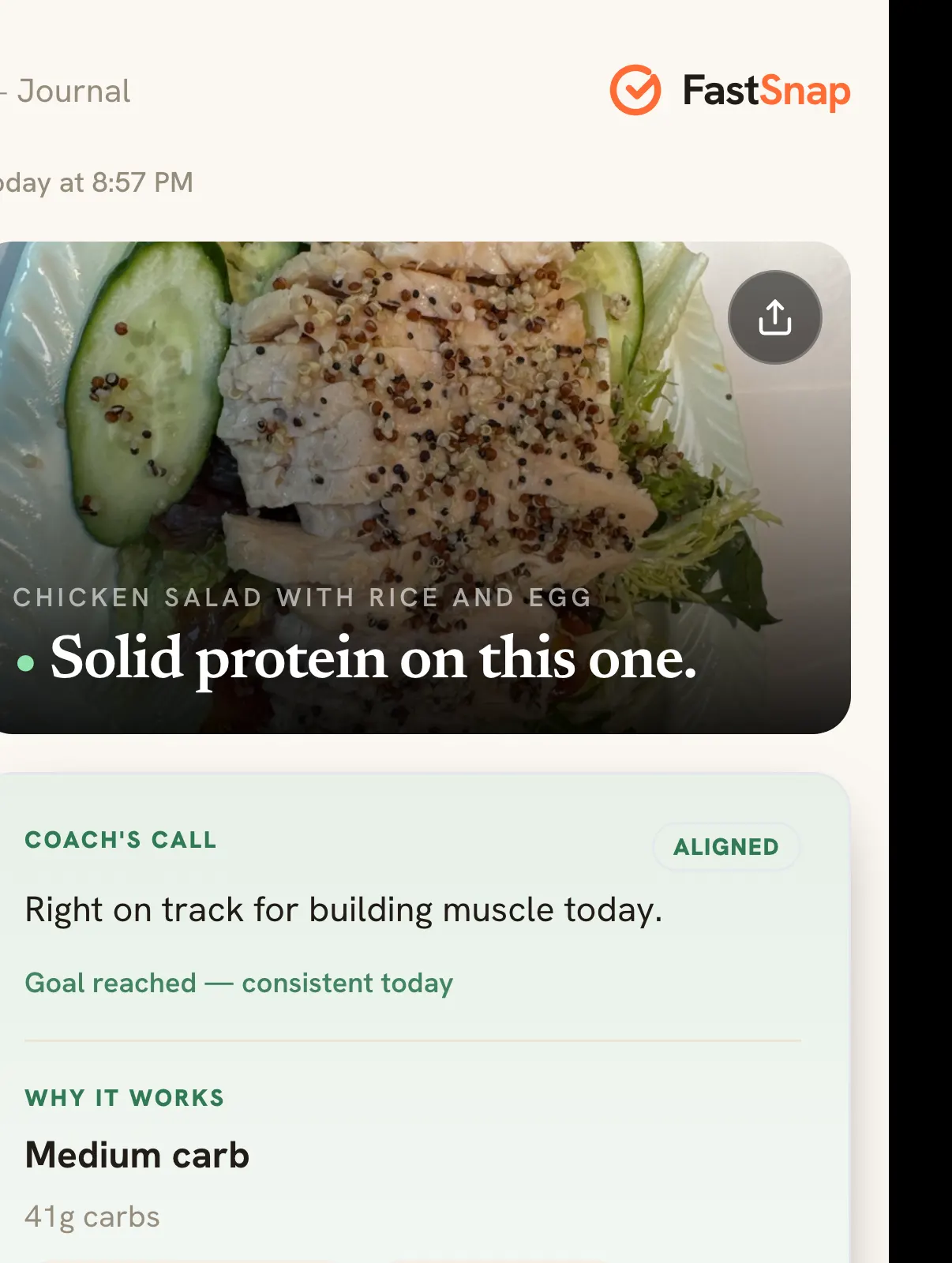
When two plates look the same size, ask which one is richer — then tip that.
Next: What tips the plate? · Balanced plate · Skip the fries
What FastSnap does
When oil, cream, a fried coating, or a sugary drink changes direction without looking “big,” FastSnap’s Coach’s Call names that tip — then What’s next — without asking you to measure the plate.